Passeio Químico em Vilnius, na Lituânia [Chemical trail in Vilnius, in Lithuania]

[Estive em Vilnius, na Lituânia, pela primeira vez, numa conferência internacional de História da Química. Foi uma oportunidade para refletir sobre os vários aspetos da divulgação desta ciência, em particular por haver palestras sobre os aspetos materiais da visibilidade da Química e também sobre os aspetos filosóficos, sociais e sociológicos da sua invisibilidade. Uma das organizadoras, criou um poster com um mapa onde estavam os locais importantes para a Química em Vilnius e deixou espaços para acrescentar outros. Eu tomei essa iniciativa, em particular por achar que os lugares importantes poderem ser os inesperados. Foi bastante útil esse mapa, por me permitir também refletir sobre esses aspetos.]

Vilnius é uma cidade relativamente pequena, com uma história bastante antiga, ladeada por um rio, o Néris, mas na qual um seu afluente, o Vilnia, é também importante. A sua história está cheia de ocupações, invasões, massacres e revoluções, as quais podem ser percebidas em boa parte no Museu Nacional da Lituânia (situado no antigo arsenal) e no Museu das Vítimas do Genocídio e Museu Judaico (destes, só visitei o primeiro). Vilnius comemora este ano, 700 anos da sua fundação, mas a Lituânia só se se tornou independente do império soviético em 1993. Católica quase desde a sua fundação, tem cerca de quarenta igrejas.

Nota-se alguma religiosidade (eu vi uma jovem a benzer-se demoradamente junto a uma igreja e assisti a uma parte de uma missa, onde havia muita gente ajoelhada), mas muitos habitantes não ligam nada à religião, imagino eu.  

Desde que a Lituânia se tornou independente do império soviético, tem havido um esforço de modernização e adaptação ao ocidente bastantes impressionantes. É uma cidade muito verde, cheia de auto-pistas, preocupada com o ambiente, amiga das pessoas e viva e alegre (nos bares encontram-se ao fim da tarde sempre dezenas de jovens a rir, beber e conversar).  

Neste texto irei falar essencialmente dos aspetos químicos em que pensei ou em que reparei enquanto lá estive. Em boa parte são aspetos locais, muitos não serão assim tão importantes (ou serão), mas, como acabou um conferencista que traçou a história da Química na Lituânia, parafraseando uma resposta que foi dada a Napoleão por um professor lituano - Andrius Sniadeckis (1768-1838), pioneiro da Bioquímica, que estudou em Paris, sobre o qual descerrámos uma placa durante o congresso - quando o exército de Napoleão ocupou esta nação: “é igual à dos outros países”. Foi também essa resposta que dei ao empregado de uma livraria quando este perguntou se achávamos (eu o e o meu colega) se a Química era forte na Lituânia. Há, no entanto, uma coisa que salta à vista. É uma cidade em que há muitos nomes “químicos” nas ruas. Por exemplo, há uma loja chamada “molécula”, uma loja de chocolate chamada “teobromina”, algumas lojas de café chamadas “cafeína” e lojas chamadas “droga.” Mas há várias lojas que prometem cosméticos naturais e até há uma loja chamada “biodroga”! 

Chamou-me a atenção uma placa evocativa de um químico importante da área da eletroquímica, que foi presidente da academia das Ciências, Juozas Matulis (1899-1993). Vi assim, duas placas evocativas de químicos, o que não é mau, embora, nesta cidade haja bastantes placas evocativas de poetas e escritores. Nas paredes da Rua da Literatura há mais de duzentas de obras de arte evocativas de outros tantos escritores que tiveram algo a ver com a Lituânia. Não há nenhum escritor português, mas dos conhecidos internacionalmente, podemos referir Jean-Paul Sartre e Gunter Grass. 

A primeira coisa que fizemos nas atividades do congresso foi visitar a Thermofisher  Scientific, que tem em Vilnius uma grande instalação que envolve desde o desenvolvimento e a investigação até à produção de compostos e materiais. Começou por ser um instituto especializado em enzimas com mais de sessenta anos que foi comprado pela Thermofisher. Agora são feitos ali muitos outros produtos. Visitámos uma parte onde, se não me engano, criaram mais de 26 mil metros quadrados de “salas limpas” seguindo as normas GMP (Good Manufacturing Practices).

Estas são, de acordo com as normas GMP, usadas na indústria farmacêutica, com letras: C (até 3,52 milhões de partículas de 0.5 micrómetros e 29 mil partículas de 5 micrómetros, em operação); B (até 352 mil partículas de 0.5 micrómetros e 2,9 mil partículas de 5 micrómetros, quando em operação); e A (até 3,52 mil partículas de 0.5 micrómetros e 20 partículas de 5 micrómetros em operação), tudo por metro cúbico. Pode parecer muito, mas numa sala limpa normal poderemos ter 35,2 milhões de partículas de 0.5 micrómetros e 292 mil partículas de 5 micrómetros em operação. Vemos assim que ao passar para uma sala limpa de classe C o número de partículas apresenta valores 10 vezes menores aos de uma sala normal. E ao passarmos para uma sala limpa de classe B, o número de partículas diminui 10 vezes em relação à anterior de classe C, ou seja 1000 vezes em relação a uma sala normal. E finalmente ao passarmos para uma sala de classe A, teremos valores mais de 100 vezes inferiores, o que dará cem mil vezes inferiores ao de uma sala normal. E só referi os números em operação (em repouso são significativamente inferiores). Como é que isto é conseguido?Com filtros e com pressões um pouco superiores à do exterior. Há muitos outros cuidados a ter. Não ter papel perto, por exemplo, assim como outros materiais que libertem partículas. E estarem seres humanos nestas salas o menos possível.
Nestas instalação produzem DNA com determinadas sequências que são pedidas pelos clientes, sílica gel de vários tipos, tamanhos e revestimentos, materiais para vacinas, entre várias outras coisas. Uma boa parte das atividades são automatizadas, pois a principal fonte de contaminações é, como referi, humana. Se não me engano, o percentagem de trabalhadores com licenciatura é superior a 95%. Esta empresa, patrocinou uma edição moderna do livro mais importante de Sniadeckis e a colocação da placa evocativa que foi inaugurada na presença de um jovem ministro cuja formação inicial é em Química. 

Quando cheguei à cidade, uma das primeiras coisas que me chamou atenção foi o enferrujamento dos cadeados que, como em qualquer cidade, são colocados pelos namorados nas pontes. Pensei que, como há muita neve no inverno e provavelmente usam sal (cloreto de sódio, mas também cloreto de cálcio) para a fundir através do abaixamento do ponto de fusão da solução, a combinação de água e iões cloreto faz com que o enferrujamento seja acelerado. Também me chamou a atenção a manutenção contínua que é feita e que é necessária especialmente nestes casos.

Nos países bálticos há muito âmbar. Este, desde a pré-história, era apanhado no mar. Trata-se, como é sabido, de uma resina fóssil com grande percentagem de carbono. Quando é recolhido, é um material baço pois a sua superfície fica irregular com o tempo. Depois de lixado e polido, fica com o aspeto característico que conhecemos, dourado, mas há âmbar de outras cores, como por exemplo de cor branca. Algo comum a todas as formas é que é frágil e combustível. O âmbar em geral tem densidade 1.050-1.096 g/mL e afunda na superfície da água do mar (densidade 1.020-1.030 g/mL), mas flutua em águas do mar mais salinas. Alguns plásticos também flutuam, em particular o polietileno (densidade 0.941-0.967 g/mL). Mas o nylon (densidade 1.14 g/mL), o vidro acrílico (densidade 1.18 g/mL), a baquelite (densidade 1.3 g/mL) e o poliéster (densidade 1.38 g/mL) têm densidades mais altas e afundam, mesmo nas águas mais salinas. Fazendo um solução com três copos de água e um pouco menos de meio copo de sal, ficamos com uma concentração de sal de cerca de 15% de massa em volume que tem densidade 1,1 mL a 20ºC e na qual o âmbar flutua mas não a maioria das imitações de plástico. As imitações de vidro obviamente nunca flutuam, qualquer que seja a densidade da água do mar, já que tem densidade de cerca de 2.5 g/mL.

Há imensas coisas que poderiam ser referidas, mas vou referir essencialmente as que investiguei, como referi. Perto do local onde estava instalado havia uma chaminé antiga preservada e prédios modernos. Procurei saber qual era a origem e percebi que era de uma antiga fábrica de meias (a Esparta) e deu origem a um complexo onde está as empresas Oxylab e a NordSecurity (o segundo unicórnio da Lituânia, segundo li), só sobrando a chaminé. Fundada em 1918, esta fábrica saiu da cidade, pertence agora a um grupo dinamarquês, mas ainda labora. Produz além de meias, roupas interiores, entre outras peças de roupa. Perguntam que é que as meias têm a ver com a Química? Para começar os materiais, mesmo naturais (algodão, lã e seda, entre outros, como bambu envolvem materiais de natureza química). Também os materiais artificiais (elastano, polipropileno, poliéster, entre outros), depois as combinações de materiais e as composições com propriedades particulares. Por outro lado, os corantes, para o tingimento, são também uma faceta importante da Química. Mas esta, assim, como outras coisas que poderemos considerar triviais, não estava no mapa elaborado pela minha colega.  

Neste mapa da Química em Vilnius, eram indicados os locais onde se fabricou vidro pela primeira vez, onde foram fundidos canhões, os locais onde se ensinou química, os locais das academias, os institutos vários, etc. Foi também indicado o local onde situavam as antigas associação de fabricantes de cerveja, fundidores, ceramistas, tecelões, sopradores de vidro, os locais das tipografias que imprimiram os primeiros livros de Química, assim como instalações modernas, etc. Trata-se de um documento notável e interessante, mas sempre incompleto. Na minha opinião, é necessário chamar a atenção coisas menos óbvias, como as roupas, a água canalizada e tratada, a iluminação pública, por exemplo.

De facto, acho que devemos mostrar as ligações menos conhecidas e mais inesperadas. Numa rua, podemos encontrar uma estátua de homenagem ao “acendedor”. De que se trata? Que é que isto tem a ver com a Química? No século XIX a iluminação era realizada a gás, o qual era necessário ser acendido. 

Fui ao Museu da Energia e da Técnica, situado numa antiga central de produção de energia elétrica que foi fundada em 1902, onde esperava encontrar alguma memória desse tempo (até por ter ficado com a ideia de que foi ali a fábrica do gás no século XIX) mas não encontrei qualquer memória, o que é pena. O museu que tem uma componente de Exploratório, onde se encontravam muitas crianças. Neste museu, privilegiavam-se sobretudo as componentes da central elétrica antiga, embora houvesse um modelo da central nuclear de Ignalina que foi desativada em 2009 e era similar à de Chernobyl, a qual permitia à Lituânia ser independente em termos de produção de energia elétrica e mesmo que a exportasse. Atualmente importa cerca de 70% da energia elétrica que usa, sobretudo da Suécia. 

Numa rua encontramos uma estátua de um aguadeiro que era em geral um judeu pobre que ia buscar água ao rio. Podem perguntar o que é que isto tem a ver com química. Tem muito mais do que a estrutura molecular da água. Hoje a água é canalizada, recolhida com cuidado, analisada, tratada, vigiada ao longo do percurso até à nossa torneira. Antigamente contava-se com o facto de água ser corrente, ter bom aspeto, ser fresca e saber bem, mas pouco mais se sabia sobre a qualidade de líquido. Podia ter todas estas características e estar poluída ou contaminada com micro-organismos. Por isso, a estátua do aguadeiro, lembra-nos de tempos em que as coisas eram piores.   

O Jardim dos Bernardos é o jardim mais antigo de Vilnius. Este jardim, junto ao rio Vilnia é muito bonito e relaxante, havendo mesas com tabuleiros de damas, numas delas estavam tampas de águas e refrigerantes coloridas. Numa pequena parte podemos encontrar canteiros com plantas medicinais. Num dos seus extremos fica a elegante catedral de Santa Ana que apaixonou Napoleão ao ponto deste querer levá-la, pedra por pedra, para Paris, segundo uma lenda repetida em vários locais. Trata-se de uma catedral vermelha escura de tijolos de barro, mas tendo estes formatos bastante diferentes, os quais num lado mostram as formas que foram usadas.
O barro é um material muito interessante e versátil que depois de cozido fica duro de forma definitiva pela libertação de água e formação de ligações covalentes rígidas. Numa das pontes sobre o Vilnia estavam mais uma vez cadeados enferrujados, mas notei um arbusto de sumagre e também bastantes insígnias relativas aos jesuítas. Do lado oposto fica a famosa “república” independente de Uzupis cuja constituição está escrita em dezenas de línguas. Não notei que estivesse em português e fiz eu essa tradução dos 42 artigos de que enfatizo o artigo 8: “Todos têm o direito de serem desconhecidos e indistintos”.     

Em Vilnius há muitos castanheiros-da-índia (Aesculus hippocastanum) cujos frutos são parecidos com os frutos do castanheiro-doce (Castanea sativa). Parecidos, mas em nada iguais. Os primeiros não são comestíveis, não têm o bico caraterístico, além de da cápsula onde estão ter formato muito diferente da outra. Devido ao vários compostos que contêm, em particular escina e várias saponinas, são usados para combater a traças. Há uma história que já contei noutra entrada de que na Grã-Bretanha  houve um projeto para usar os seus frutos para obter acetona por fermentação e esta ser usada para a obtenção de pólvora sem fumo durante a primeira guerra mundial.  

As paredes de Vilnius estão na maior parte caiadas, mas em vários locais é feita uma espécie de sondagem às paredes, revelando de forma intencional os tijolos e as pinturas antigas, deixando-os a descoberto quase sempre de forma harmoniosa. É assim, que na parede da universidade se podem ver vestígios de relógios do sol, por exemplo, e quase todas as paredes do Museu Nacional foram sondadas. A catedral, que foi usada para outros fins durante o período soviético, está caiada, mas está posto a descoberto a ligação desta com o palácio dos Condes da Lituânia (que não visitei). É nesta catedral que se situa do lado direito, uma capela notável com estátuas de prata e belos mármores que vale a pena visitar.

O congresso decorreu num moderno instituto a cerca de seis quilómetros do centro onde está o Instituto de Física e Química. As paredes do edifício têm grandes azulejos e janelas hexagonais que lembram o grafeno. No átrio de entrada, mas colunas havia uma exposição de cientistas que tiveram as suas imagens em moedas e notas. Alexander von Humboldt, Marie Curie, Justus von Liebig, and others. A ciência de fazer moedas e notas tem muito que se lhe diga, mas vamos ficar com esta bela imagem de cientistas e ciência nos nossos bolsos. Entretanto, as coisas evoluem e cada vez menos se usa dinheiro, pagando-se com cartões e telemóvel.

[Verified automatic translation]

[I was in Vilnius, Lithuania, for the first time, at an international conference on the history of chemistry. It was an opportunity to reflect on the various aspects of the dissemination of this science, in particular, because there were lectures about the material aspects of the visibility of chemistry and also the philosophical, social, and sociological aspects of its invisibility. One of the organizers created a poster with a map where the important places for Chemistry in Vilnius were and left spaces to add others. I took this initiative, in particular, because I thought that the important places could be the unexpected ones. This map was quite useful because it also allowed me to reflect on these aspects].

Vilnius is a relatively small city with quite an ancient history, flanked by a river, the Neris, but in which a tributary, the Vilnia, is also important. Its history is full of occupations, invasions, massacres, and revolutions, which can be seen to a great extent in the Lithuanian National Museum (located in the old arsenal), the Museum of Genocide Victims, and the Jewish Museum (of these, I only visited the first). Vilnius celebrates 700 years of its founding this year, but Lithuania only became independent from the Soviet Empire in 1993. Catholic almost since its foundation, it has about forty churches. There is some religiosity (I saw a young woman blessing herself at length next to a church and attending part of a mass, where many people were kneeling), but many inhabitants don't care about religion at all, I think.

Since Lithuania became independent from the Soviet empire, there has been a very impressive effort to modernize and adapt to the West. It is a very green city, full of freeways, concerned with the environment, friendly to people, lively and cheerful (in the bars, in the evening, you can always find dozens of young people laughing, drinking, and chatting).

In this text I will talk mainly about the chemical aspects that I thought about or noticed while I was there. Most of them are local aspects, and many will not be that important (or will be), but, as a lecturer who traced the history of Chemistry in Lithuania ended by paraphrasing an answer that was given to Napoleon by a Lithuanian professor - Andrius Sniadeckis (1768-1838), pioneer of Biochemistry, who studied in Paris, about whom we unveiled a plaque during the congress - when Napoleon's army occupied this nation: "it is the same as in other countries". This was also the answer I gave to a bookstore clerk when he asked if we (I and my colleague) thought that Chemistry was strong in Lithuania. There is, however, one thing that stands out. It is a city in which there are many "chemical" names on the streets. For example, there is a store called "molecule," a chocolate store called "theobromine," some coffee stores called "caffeine," and stores called "drug." There are also several stores that promise natural cosmetics and there is even a store called "biodrug".

My attention was drawn to a plaque evocative of an important chemist in the field of electrochemistry, who was president of the Academy of Sciences, Juozas Matulis (1899-1993). Thus, I saw two plaques evocative of chemists, which is not bad, although in this city there are plenty of plaques evocative of poets and writers. On the walls of Literature Street, there are more than two hundred works of art evoking other writers who had something to do with Lithuania. There are no Portuguese writers, but of the internationally known ones, we can mention Jean-Paul Sartre and Gunter Grass.

The first thing we did in the congress activities was to visit Thermofisher Scientific, which has a large facility in Vilnius that involves everything from development and research to the production of compounds and materials. It started as an enzyme specialist institute over sixty years old that was bought by Thermofisher. Now many other products are made there. We visited one part where, if I am not mistaken, they have created over 26,000 square meters of "clean rooms" following GMP (Good Manufacturing Practices) standards. 

These are according to GMP standards, used in the pharmaceutical industry, with letters: C (up to 3.52 million particles of 0.5 micrometers and 29,000 particles of 5 micrometers in operation); B (up to 352,000 particles of 0.5 micrometers and 2,900 particles of 5 micrometers when in operation); and A (up to 3.52 thousand particles of 0.5 micrometers and 20 particles of 5 micrometers in operation), all per cubic meter. It may sound like a lot, but in a normal cleanroom, we might have 35.2 million 0.5-micrometer particles and 292,000 5-micrometer particles in operation. So we see that when we move to a class C cleanroom the number of particles is 10 times smaller than in a normal cleanroom. And when we move to a class B cleanroom, the number of particles decreases another 10 times compared to the previous class C cleanroom, or 1000 times compared to a normal room. And finally, when we move to a class A room, we will have values more than 100 times lower, which will be 100,000 times lower than in a normal room. And I only mentioned the numbers in operation (at rest they are significantly lower). How is this achieved? With filters and with pressures a little higher than outside. There are many other precautions to be taken. Not having paper nearby, for example, as well as other materials that release particles. And to have human beings in these rooms as little as possible. In this facility, they produce DNA with certain sequences that are requested by the customers, silica gel of various types, sizes, and coatings, and materials for vaccines, among several other things. A good part of the activities are automated, since the main source of contamination is, as I mentioned, human. If I am not mistaken, the percentage of workers with a college degree is over 95%. This company sponsored a modern edition of Sniadeckis' most important book and the placement of the evocative plaque that was inaugurated in the presence of a young minister whose initial degree is in Chemistry.

When I arrived in the city, one of the first things that caught my attention was the rusting of the padlocks that, as in any city, now are placed by lovers on bridges. I thought that since there is a lot of snow in the winter and they probably use salt (sodium chloride, but also calcium chloride) to melt it by lowering the melting point of the solution, the combination of water and chloride ions causes the rusting to be accelerated. I was also struck by the ongoing maintenance that is done and is necessary, especially in these cases.

In the Baltic countries, there is a lot of amber. This, since prehistoric times, was caught in the sea. It is, as is well known, a fossil resin with a high percentage of carbon. When it is collected, it is a dull material because its surface becomes uneven with time. After sanding and polishing it gets the characteristic look we know, golden, but there are other colors of amber, such as white. Something common to all forms is that it is brittle and combustible. Amber, in general, has a density of 1,050-1,096 g/mL and sinks to the surface of seawater (density 1,020-1,030 g/mL) but floats in more saline seawater. Some plastics also float, in particular polyethylene (density 0.941-0.967 g/mL). But nylon (density 1.14 g/mL), acrylic glass (density 1.18 g/mL), bakelite (density 1.3 g/mL), and polyester (density 1.38 g/mL) have higher densities and sink, even in the saltiest waters. Making a solution with three cups of water and a little less than half a cup of salt, we are left with a salt concentration of about 15% mass by volume that has a density of 1.1 mL at 20°C and in which amber floats but not most plastic imitations. Glass imitations never float whatever the density of seawater is, since it has a density of about 2.5 g/mL.

There are lots of things that could be mentioned, but I will essentially mention those that I investigated, as I mentioned. Near the site where it was installed, there was an old chimney preserved and modern buildings. I looked up the origin and realized that it was from an old hosiery factory (Sparta) and originated from a complex where Oxylab and NordSecurity (Lithuania's second unicorn, I read) is located, with only the chimney left. Founded in 1918, this factory left the city, belongs now to a Danish group, but is still operating. It produces not only socks but also underwear, among other clothing items. You can ask what socks have to do with Chemistry. To begin with the materials, even natural ones (cotton, wool, and silk, among others, like bamboo involve materials of a chemical nature). Also the artificial materials (elastane, polypropylene, polyester, among others), then the combinations of materials and compositions with particular properties. On the other hand, dyes, for dyeing, are also an important facet of chemistry. But this, as well as other things that we might consider trivial, was not on the map drawn up by my colleague.

In this map of Chemistry in Vilnius, the places where the glass was first made, where cannons were melted, the places where chemistry was taught, the places of the academies, the various institutes, etc. were indicated. Also indicated were the locations of the old associations of brewers, smelters, potters, weavers, and glassblowers, the locations of the printers who printed the first chemistry books, as well as modern installations, etc. This is a remarkable and interesting document, but always incomplete. In my opinion, less obvious things, such as clothing, piped and treated water, and public lighting, for example, need to be pointed out.

I think we should show the less-known and more unexpected connections. On one street, we can find a statue honoring the "lighter". What is this about? What does this have to do with chemistry? In the 19th century lighting was accomplished with gas, which had to be lit. I went to the Energy and Technique Museum, located in an old power plant that was founded in 1902, where I expected to find some memory of that time (even because I got the idea that it was the gas factory there in the 19th century) but I didn't find any memory, which is a pity. The museum has an Exploratory component, where many children could be found. In this museum, the main focus was on the components of the old power plant, although there was a model of the Ignalina nuclear plant that was decommissioned in 2009 and was similar to the Chernobyl plant, which allowed Lithuania to be independent in terms of electricity production and even to export it. Today it imports about 70% of the electricity it uses, mainly from Sweden.

On one street we found a statue of a waterman who was generally a poor Jew who fetched water from the river. You may ask what this has to do with chemistry. It has much more than the molecular structure of water. Today water is piped, collected with care, analyzed, treated, and watched over to our tap. In the old days, we used to count on the water running, looking good, being fresh, and tasting good, but little else was known about the quality of the liquid. It could have all these characteristics and be polluted or contaminated with microorganisms. That is why the statue of the water-taker reminds us of times when things were worse.

The Bernard Garden is the oldest in Vilnius. This garden by the Vilnia River is very beautiful and relaxing, and there are tables with checkerboards, on one of them with colored water and soft drink lids. In a small part, we can find beds with medicinal plants. At one end of the cathedral is the elegant cathedral of Santa Ana which Napoleon fell in love with to the extent that he wanted to take it back, stone by stone, to Paris, according to local legends. It is a dark red cathedral made of clay bricks, but having quite different shapes, which on one side show the shapes that have been used. Clay is a very interesting and versatile material that after being fired becomes permanently hard by releasing water and forming rigid covalent bonds. 

On one of the bridges over the Vilnia were once again rusty padlocks, but I noticed a sumac bush and also quite a few insignias relating to the Jesuits. On the opposite side is the famous independent "republic" of Uzupis whose constitution is written in dozens of languages. I didn't notice that it was in Portuguese and I did this translation. From the 42 articles, I emphasize article 8: "Everyone has the right to be unknown and undistinguished".

In Vilnius, there are many horse chestnut trees (Aesculus hippocastanum) whose fruits are similar to the fruits of the sweet chestnut tree (Castanea sativa). Similar, but not at all the same. The first ones are not edible, do not have the characteristic beak, and the capsule where they are located is very different in shape from the other. Due to the various compounds they contain, in particular escin and various saponins, they are used to fight moths. There is a story I have already told in another entry that in Great Britain there was a project to use their fruit to obtain acetone by fermentation and this was used to obtain smokeless gunpowder during the first world war.

The walls of Vilnius are mostly whitewashed, but in several places, a kind of probing of the walls is done, intentionally revealing the ancient bricks and paintings, almost always leaving them uncovered harmoniously. This is how you can see traces of sundials on the wall of the university, for example, and almost all the walls of the National Museum have been probed. The cathedral, which was used for other purposes during the Soviet period, is whitewashed, but its connection to the palace of the Counts of Lithuania (which I did not visit) is uncovered. On the right side of this cathedral is a remarkable chapel with silver statues and beautiful marble that is worth visiting.

The congress was held in a modern institute about six kilometers from the center where Physics and Chemistry Institute is located. The walls of the building have large tiles and hexagonal windows reminiscent of graphene.  In the entrance hall, columns there was an exhibition of scientists who have had their images in coins and notes.  Alexander von Humboldt, Marie Curie, Justus von Liebig, and others. The science of making coins and notes has a lot to live up to, but let's keep this nice picture of scientists and science in our pockets. Meanwhile, things are evolving and we use cash less and less, paying with cards and cell phones.

References consulted

Petit Futé. Vilnius City trip. 2018.

National Museum of Lithuania. The High Castle of Vilnius. 2013.

Passeios químicos em Bragança [Chemical trails in Bragança]

[Como parte da minha participação no SciCom 2023 em Bragança, vou escrever notas sobre um passeio químico nesta cidade. Estive em Bragança em 2019, altura em que tirei as fotografias que ilustram este passeio.]

Junto ao castelo fica uma das mais conhecida construção de Bragança. Se bem me lembro, esta é feita de rochas castanhas, provavelmente de dolomita, uma rocha calcária com elevada percentagem de magnésio, essencialmente CaMg(CO3)2. 

Do castelo vê-se uma estação de tratamento de águas residuais (ETAR). Li vários trabalhos sobre a reabilitação do Rio Fervença, afluente do Rio Sabor, que atravessa Bragança. Pode (ou não) ter que ver com isso. É preciso lembrar que estabelecimento de um povoamento estável e viável implica que haja água disponível. Antigamente, embora fosse usada menos água por pessoa, isso era ainda mais crítico pois essa água não era canalizada nem tratada. E quando as populações começam a usar o rio para fazer os seus despejos e esgotos, têm de se encontrar outras formas de abastecimento. 

Não tem nada a ver, em termos de volume de água, mas o Tamisa de Londres no meio do século dezanove ficou conhecido como o “Great Stinker” (o grande mal-cheiroso), havendo até um episódio em Michael Faraday mostrou que este era completamente opaco usando papéis brancos que deixavam de ser vistos mal mergulhavam nas águas. O rio estava morto e era muito mal cheiroso e a principal razão era que os esgotos corriam para o rio sem tratamento. Penso que o Fervença não chegou tão longe nem esteve tão mal, mas a reabilitação é fundamental para devolver os rio à cidade. Não deveria ser necessário dizer isto, mas as saudades de “antigamente” são muitas vezes mais retóricas do que reais. Pense-se nessas poluições e cheiros absurdos, na falta de tratamento e vigilância das águas e todas as infeções que espreitavam, na falta de tratamento de água e esgotos. Podemos e devemos fazer melhor e mais sustentável com a ciência e tecnologia que temos ao nosso dispor, mas ter saudades desse tempo supostamente “bom”, não!  

Em 2019, caminhei junto ao rio (há um passeio para isso) e vi várias coisas interessantes, mas também a tensão devida à reabilitação de uma parte da cidade que vivia de costas para o rio. É aí que fica o Centro de Ciência Viva. É muito comum deparamos com a corrosão do ferro. Basicamente, não estando protegido ou com capas que impeçam o oxigénio de reagir com este metal, ou com a presença de outro metal que seja ainda mais suscetível de corrosão como o zinco, o ferro oxida-se de forma caraterístico. Tirei várias fotografias de materiais que se poderiam ver dali ((alumínio e outros materiais, nomeadamente plásticos e outros metais).  Achei muito curiosas e pedagógicas as misturas de redes e revestimentos de vários materiais. Junto ao rio estavam também ramos e flores de sumagre (secos na altura). Não sei se já referi, mas Portugal foi um grande exportador de fores desta planta secas, as quais eram usadas para curtir peles. Acontece que têm uma quantidade muito grande de taninos e eram muito usadas para isso.        

Também achei muito curiosos os xistos com rochas verdes. Fiquei logo a pensar que fossem serpentinas que são muito raras em Portugal e foram exploradas em Bragança, mas não tinha pensado mais nisso até ter estudado a questão a propósito de um passeio químico em Florença. Escrevi na altura que as serpentinas são rochas que têm na sua composição química (aproximada) três iões de magnésio para um silicato e quatro iões de hidróxido, Mg3SiO3(OH)4. O seu nome deriva de terem aspeto de pele de serpente [...] Nas serpentinas verdes, alguns átomos de magnésio são substituídos por átomos de ferro. 

Nestas rochas fotografei um inseto (Pyrrhocoris apterus), percevejo-das-Tílias, que é relativamente inofensivo segundo li (a identificação do inseto e muitas outras coisas foram realizadas via Google e Internet, mas é preciso estudar os vários aspetos envolvidos com espírito crítico; temos hoje em dia uma quantidade de possibilidades poderosas, mas estas não podem ser o fim, mas o início de um trabalho). Segundo li também, os extratos de abeto balsâmico podem impedir o desenvolvimento dos insetos devido a uma substância, a jubaviona, um sesquiterpeno que é análogo de uma hormona juvenil do inseto.

Notei uma placa evocativa de Isaac Orobio de Castro que nascei cerca de 1617 em Bragança mas morreu em 1687 em Amesterdão. De origem hebraica e médico, passará por Espanha onde se tornará celebre e irá ser um dos poetas mais conhecidos da comunidade sefardita de Amesterdão. Que é que isto tem a ver com Química? Quase nada diretamente, mas indiretamente muito. Depois de um desenvolvimento auspicioso com as descobertas, com a atitude castigadora e ignorante, Portugal e Espanha, drenaram para os Países Baixos muitas das suas hipóteses de desenvolvimento científico futuro. É uma espécie de Princípio da Conservação da Massa Crítica. E assim, não será por acaso que os holandeses, um povo tão pequeno como o português, num país ainda mais pequeno, cheio de problemas com o mar, irão conquistar as posições portuguesas nas descobertas e emprestar dinheiro e vender os mais diversos materiais a Portugal e Espanha. Ainda hoje se notam os efeitos nas atitudes e ações de algumas pessoas, mas, com atrasos e retrocessos, estamos muito melhor no que concerne a valorizarmos a educação e a liberdade, únicos garantes de desenvolvimento científico sustentável futuro.          

Encontrei ferros “chumbados” com chumbo (o metal) numa das mais conhecidas pousadas de Bragança. Era assim que se fazia antigamente: usava-se chumbo, um metal mole e com baixo ponto de fusão, para ajudar a unir o ferro mais duro à pedra.  Vi também janela com “vidros imperfeitos”. Como se sabe, só cerca de 1950 foi possível obter vidros grandes sem imperfeições, pois estes começaram a ser arrefecidos sobre estanho líquido. Antes disso, os vidros só poderiam ser obtidos por sopragem do vidro fundido e depois cortados e estendidos ou, mais tarde, usando rolos metálicos. Isso originava vidros que só poderiam ser de pequenas dimensões e com bastantes imperfeições. Assim, as casas antigas têm janelas com vidros pequenos não por razões estéticas, mas porque era impossível obter vidros de grandes dimensões.  

São muito famosas aqui as receitas com “casulas.” Basicamente, estas são as cascas do feijão, colocadas de molho para amolecerem e cozinhadas. Vou evidenciar dois aspetos químicos relevantes que isto nos mostra. O papel da água no amolecimento de algumas estruturas fibrosas e a sustentabilidade. Penso que o amolecimento será devido às moléculas de água entrem dentro das estruturas e perturbarem as ligações de hidrogénio dos seus polímeros. Isto é uma afirmação geral, para verificar como acontece em particular, poderemos fazer estudos e simulações (estes já devem ter sido feitos, ou estão em desenvolvimento). Conhecer os mecanismos de como as coisas acontecem, assim como as suas condições, pode ajudar a melhorar os processos. Esta aplicação das cascas do feijão que surgiu da escassez de alimentos, ilustra bem a sustentabilidade que hoje em dia é, não só muito valorizada, mas fundamental. E se a sustentabilidade antiga surgiu da pobreza e da necessidade de aproveitar todos os recursos (não é por acaso que um dos momentos mais sustentáveis da Europa foi a seguir à Segunda Guerra Mundial), hoje em dia temos possibilidades de controlar muito processos e meios de obtermos alimentos de forma mais sustentável sem termos de recorrer a estes processos, nomeadamente carne obtida a partir de células, entre outros.     

Finalmente, fui a uma exposição muito interessante que dava destaque a Jacob de Castro Sarmento (1790-1662). Este, tendo nascido em Bragança e exercido medicina teve de fugir para Inglaterra, pois era também de origem judaica, onde acabou por morrer. Foi sócio da Royal Society, teve impacto na ciência da altura e também alguma influência na Ciência em Portugal. Tal como referi a propósito de Isaac Orobio de Castro, não foram nada boas para a desenvolvimento de Portugal estas perseguições. E durante séculos não se aprendeu nada com este passado. Mesmo a reforma Pombalina, que pretendeu implementar o Iluminismo em Portugal, com os conselhos e as contribuições intelectuais de muitos desses emigrados, modernizou a parte técnica mas manteve o despotismo e as perseguições. No entanto, procurar modernizar um país de forma autoritária está condenado ao fracasso. Iluminismo é segundo Kant sinónimo de liberdade. Poder expressar livremente as suas ideias. Diria que será também não ter necessidade de ter medo de poder ser perseguido pelas ideias e convicções, ou pelos preconceitos que a sociedade tem em relação a estas. 

[authomatic, but verified, translation]

[As part of my participation in SciCom 2023 in Bragança, I will write notes about a chemical trail in this city. It was in 2019 when I took the photographs that illustrate this trail.]

Next to the castle is one of the best-known buildings in Bragança. If I remember correctly, this is made of brown rocks, probably dolomite, a limestone rock with a high percentage of magnesium, essentially CaMg(CO3)2.

From the castle, you can see a wastewater treatment plant (WWTP). I read several works on the rehabilitation of the Fervença River, which crosses Bragança, a tributary of the Sabor River. It may (or may not) have something to do with it. It must be remembered that the establishment of a stable and viable settlement implies that there is water available. In the past, although less water was used per person, this was even more critical as this water was not piped or treated. And when the populations start to use the river to carry out their evictions and sewers, other forms of supply have to be found.

It has nothing to do with the Thames when the volume of water is concerned, but London's Thames in the mid-nineteenth century became known as the "Great Stinker", and there was even an episode where Michael Faraday showed that this river was completely opaque, using white papers that could no longer be seen as soon as they were submerged in water. The river was dead and very smelly, and the main reason was that sewage ran into the river untreated. I think that Fervença didn't make it that far nor was it that bad, but rehabilitation is essential to give back the river to the city. It shouldn't be necessary to say this, but the nostalgia for “the old days” is often more rhetorical than real. Think of those absurd pollutions and smells, the lack of water treatment and surveillance, all the infections that lurked, and the lack of water and sewage treatment. We can, and should, do better and more sustainably with the science and technology that we have at our disposal, but missing that supposedly “good times," no!

In 2019, I walked along the river (there is a promenade for that) and saw a lot of interesting things, but also saw the tension due to the rehabilitation of a part of the city that used to live with its back to the river. That's where Centro de Ciência Viva is located. 

It is very common to see the corrosion of iron. Basically, not being protected or not having layers that prevent oxygen from reacting with this metal, or with the presence of another metal that is even more susceptible to corrosion such as zinc, iron oxidizes characteristically. I also took several photographs of materials that could be seen from there (aluminum and other materials, namely plastics and other metals).

I also found schists with green rocks very curious. I immediately thought that they were serpentines, which are rare in Portugal and were explored in Bragança, but I didn't think about it until I studied the matter in connection with a chemical tour in Florence. I wrote at the time that serpentines are rocks that have in their (approximate) chemical composition three magnesium ions for a silicate and four hydroxide ions, Mg3SiO3(OH)4. Their name derives from their appearance of snakeskin.  In green coils, some magnesium atoms are replaced by iron atoms.

On these rocks, I photographed an insect (Pyrrhocoris apterus), the Lime bug, which is relatively harmless according to what I read (the identification of the insect and many other things were carried out via Google and the Internet, but it is necessary to study the various aspects involved with a critical spirit; today we have several powerful possibilities, but these cannot be the end, but the beginning of work). I have also read that balsam fir extracts can impede the development of insects due to a substance, jubavione, a sesquiterpene that is an analog of an insect juvenile hormone.

I noticed a plaque evocative of Isaac Orobio de Castro who was born around 1617 in Bragança but died in 1687 in Amsterdam. Of Hebrew origin and a doctor, he will travel to Spain where he will become famous and will be one of the best-known poets of the Sephardic community of Amsterdam. What does this have to do with Chemistry? Almost nothing directly, but indirectly a lot. After an auspicious development with discoveries, with a punishing and ignorant attitude, Portugal and Spain drained many of their chances of future scientific development to the Netherlands. It is a kind of Principle of Conservation of Critical Mass. And so, it will not be by chance that the Dutch, a people as small as the Portuguese, in an even smaller country, full of problems with the sea, will conquer Portuguese positions in the discoveries and lend money and sell the most diverse materials to Portugal and Spain. Even today, the effects on the attitudes and actions of some people are noticeable, but, with delays and setbacks, we are much better at valuing education and freedom, the only guarantees of future sustainable scientific development.

I found iron “chumbado” with lead (the metal) used as a filler in one of the best-known hotels in Bragança. That's how it was done in the old days: lead, a soft metal with a low melting point, was used to help unite the hardest iron to the stone. I also saw a window with “imperfect glass”. As is known, it was only around 1950 that it was possible to obtain large glasses without imperfections, as these began to be cooled in liquid tin. Before this, glass could only be obtained by blowing molten glass and then cutting and rolling or, later, using metal rollers. This resulted in glasses that could only be small in size and with a lot of imperfections. Thus, old houses have windows with small panes, not for aesthetic reasons, but because it was impossible to obtain large panes.

Recipes with “casulas” are very famous here. These are the bean skins, soaked to soften and cooked. I will highlight two relevant chemical aspects that this shows us. The role of water in softening some fibrous structures and sustainability. I think the softening is due to water molecules getting inside the structures and disturbing the hydrogen bonds of their polymers. This is a general statement, to check how it happens in particular, we can do studies and simulations (these must have already been done, or are under development). Knowing the mechanisms of how things happen, as well as their conditions, can help to improve processes. This application of bean husks, which emerged from the scarcity of food, illustrates well the sustainability that nowadays is, not only highlighted, but, fundamental. And if ancient sustainability arose from poverty and the need to take advantage of all resources (it is no coincidence that one of the most sustainable moments in Europe was after the Second World War), today we have the possibility of controlling many processes and means of obtaining food more sustainably, namely meat obtained from cells, among others, without having to resort to these "misery" processes.

Finally, I went to a very interesting exhibition that highlighted Jacob de Castro Sarmento (1790-1662). The latter, having been born in Bragança and practiced medicine, had to flee to England (he was also of Jewish origin) where he ended up dying. He was a member of the Royal Society, had an impact on science at the time, and also had some influence on science in Portugal. As I mentioned concerning Isaac Orobio de Castro, these persecutions precluded most of the development of Portugal. And for centuries nothing was learned from this past. Even the Pombaline reform, which intended to implement the Enlightenment in Portugal, with the advice and intellectual contributions of many of these emigrants, modernized the technical part but maintained despotism and persecution. However, trying to modernize a country in an authoritarian way is doomed to failure. Enlightenment is, according to Kant, synonymous with freedom. Being able to freely express your ideas. I would say that it will also mean not needing to be afraid of being persecuted for ideas and convictions, or for the prejudices that society has about these.

Passeios químicos em Santarém [Chemical trail in Santarém]

[Fui a um encontro em Alpiarça, mas fiquei instalado em Santarém  e aproveitei para tirar algumas fotos e escrever sobre os aspetos químicos que encontrei ou em que pensei.]

Santarém tem uma longa história recheada de glórias e lendas, mas também de desencontros e esquecimentos. Não vou falar quase nada desses aspetos, mas eles são muito interessantes.  

Uma das coisas que mais me impressionou foi no túmulo de Sá da Bandeira, no Cemitério dos Capuchos, haver uma nogueira. Incluído no programa social do encontro, havia uma visita a este cemitério monumental, à casa Passos Canavarro e, claro, um almoço numa das tascas mais típicas e famosas de Santarém, o “Quinzena.”  Sá da Bandeira era, de facto, Sá Nogueira, Bernardo de Sá Nogueira, primeiro Marquês de Sá da Bandeira.

Adquiriu este nome e título pela sua coragem na defesa de um local conhecido como “da Bandeira,” mas as suas peripécias, enquanto liberal, estão narradas no seu “Diário da Guerra Civil.” Além disso, é sobejamente conhecida a sua bravura, despojamento e a perda do braço direito nessas lutas. É preciso lembrar que Sá da Bandeira fez escrever na sua campa rasa “a Pátria nada me deve” e que foi desde sempre contrário à escravatura, acabando por conseguir que fosse abolida.

Mas uma boa parte disso eu sabia. Curioso, e foi para mim novidade, foi ter dado conta de que ele estudou História Natural e Química em Paris, onde esteve exilado com Luís Mouzinho de Albuquerque. Neste cemitério encontramos também o jazigo de Manuel Passos onde têm sido depositados os restos mortais da família Passos Canavarro. Foi-nos chamado a atenção para a simbologia. Em particular reparámos na lápide de alguém que seria veterinário. Também discutimos as patines carbonáceas e a limpeza destas com jato de areia e água.      

No caminho para o cemitério passei por um local que me lembrava de ter visto em 2019 com plantas de rícino. Estas plantas são muito comuns (em Lisboa vi extensões a perder de vista com elas), mas aqui chamaram-me atenção por as ter visto no mesmo local passados três anos. O rícino tem nas suas sementes uma proteína muito venenosa. Na verdade, não há nada artificial tão venenoso e, na natureza, só é conhecida como mais venenosa a toxina da botulina (a base do conhecido botox) que é a coisa mais tóxica que existe. Escrevi no livro “Jardins de Cristais” que uma lata com esta substância, do tamanho da lata de um refrigerante, mataria metade da população do mundo! No entanto, extrair o veneno do rícino (tal como juntar essa quantidade de toxina da botulina) é muito difícil e purificar o que ficou conhecido por “pó branco” não é fácil. Assim, esta planta tem sido usada como purgativo e o seu óleo tinha vários usos. 

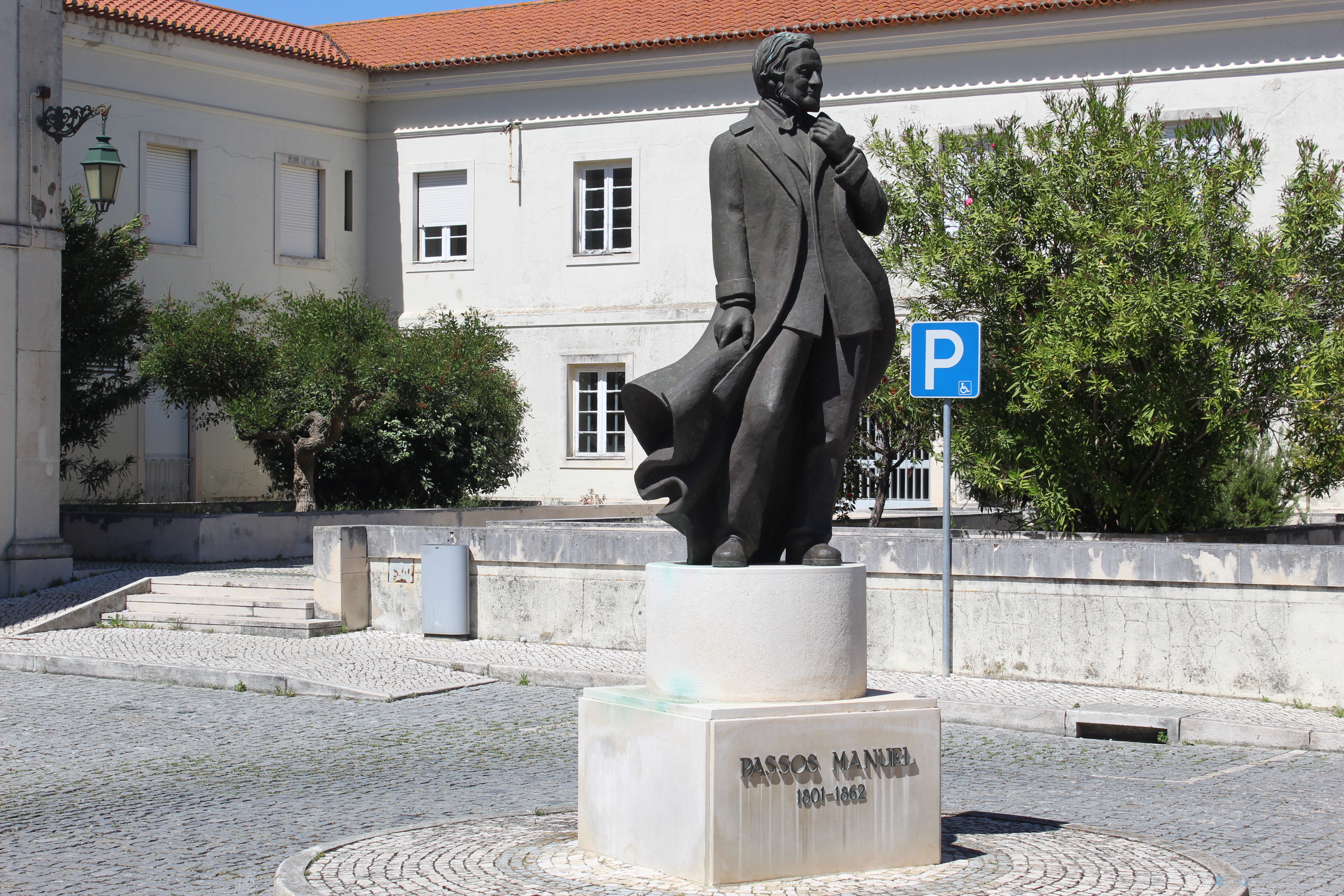
Também achei muito interessante a visita à casa Passos Canavarro, comprada por Manuel Passos (conhecido como Passos Manuel) e ao quarto onde Garrett pernoitou e escreveu uma célebre passagem das “Viagens na Minha Terra”. Convém que se saiba que Garrett só viajou entre Lisboa e Santarém quando estava a escrever o livro e que Manuel Passos era abastado, tal como era Sá da Bandeira, mas tinham ambos essa vontade liberal de fazer avançar o país e melhorar a vida das classes mais pobres. As cartas mais políticas trocadas entre Garrett e Passos estão nos arquivos, mas na casa conserva-se um carta em que Garrett convoca Manuel para uma reunião da máxima importância, para tratar de ... comer! 

Come-se bem em Santarém, como é bem conhecido, desde os nacos de carne de boi aos doces conventuais. Mas provei agora algumas iguarias menos clássicas: o “torricado” e a “cachola.” Tratam-se de pratos pobres e, provavelmente, de camponeses. O primeiro é feito com bacalhau assado desfiado em cima de pão. O segundo, com miúdos e sangue de porco, acompanhado de batatas cozidas. São bons, mas ao comê-los podemos lembrar as condições duras em que viviam as pessoas das classes baixas. Os bifes de boi eram para os ricos e os pobres comiam o que sobrava.     

Achei também muito interessantes os recipientes para “beatas” de cigarros. Já os tinha visto também quando estive em Santarém em 2019. De que são feitos os filtros do tabaco? De acetato de celulose, um polímero semi-natural que tem origem na celulose, e a sua introdução fez diminuir os nível de hidrocarbonetos poli-aromáticos (o alcatrão) que chegava aos pulmões do fumador. Julgo que parte da razão para serem poluentes é essa: não pelo material em si, mas pelos restos que contêm. Um artigo de 2019, verificou até que se degradam no mar mais depressa do que se pensava. Mais recentemente, o chamado “tabaco aquecido” faz chegar ainda menores quantidades de alcatrão ao pulmões, mas o melhor mesmo é não fumar pois estes compostos estão presentes no fumo.  
No bonito Jardim das Portas do Sol pode ver-se o Tejo de várias maneiras. No monte da direita fica o cemitério dos capuchos, de que já falei. Chamou-me a atenção uma antiga fábrica lá em baixo junto à linha de caminho de ferro e rio Tejo. Depois de alguma pesquisa consegui perceber que provavelmente era uma antiga fábrica de sabão e que o local é Alfange e que deveria ter sido requalificada até 2020. É muito curioso poder ser uma antiga fábrica de sabão.

A produção do sabão é muito antiga. Inicialmente, as pessoas usavam plantas com saponinas, mas, mais tarde, percebeu-se que as cinzas tinham compostos alcalinos que, reagindo com as gorduras, davam origem a sabões mais eficazes. Se as cinzas forem ricas em iões potássio o sabão é mais líquido, mas se forem ricas em sódio o sabão é mais duro. Isto deu origem a toda um conhecimento sobre as plantas. Mas estes processos eram muito rudimentares e com maior conhecimento de química haveríamos de chegar a um processo mais eficaz, mas ao mesmo tempo mais poluentes, de obter um composto de importância fundamental para a indústria dos sabões: o carbonato de sódio.

O método que ficou conhecido por processo Leblanc, partia do sal comum, essencialmente cloreto de sódio. Era misturado com ácido sulfúrico e obtinha-se sulfato de sódio. Entretanto, um outro produto era o ácido clorídrico, para o qual não existia uso. Podemos imaginar o nível de chuvas ácidas que existia em redor destas fábricas! Numa segunda fase, o sulfato de sódio reage com o carbonato de sódio e forma-se carbonato de sódio. Dito assim, até parecia bem, mas não. Para o processo funcionar tinha de se usar carvão e formava-se sulfureto de sódio  e monóxido de carbono. Além das chuvas ácidas, há resíduos negros e mal-cheirosos e produtos perigosos. Mas vai aparecer outra forma de obter carbonato de sódio, o processo Solvay, em que é usado amoníaco. Numa primeira fase, o sal reage com o amoníaco e dióxido de carbono e forma-se cloreto de amónio e bicarbonato de sódio. Numa segunda fase, o bicarbonato de sódio é aquecido e forma-se carbonato de sódio e dióxido de carbono. Finalmente, o amoníaco é regenerado reagindo o cloreto de amónio com cal viva. Vemos que, neste processo,  alguns dos produtos e reagentes são regenerados. Além disso, um dos produtos não desejados é mais inócuo, o cloreto de cálcio, e tem várias utilidades. Na opinião de Adélio Machado, esta mudança  no século XIX, foi uma utilização precoce da ideia de Química Verde e, podemos ainda ir mais longe, digo eu, de Economia Circular.

E como funcionam os sabões? São moléculas que têm partes hidrofílicas (que "gostam" de água) e hidrofóbicas (que "não gostam" de água). Em água estas fazem micelas (uma espécie de bolhas) onde as partes hidrofóbicas ficam para dentro e a partes hidrofóbicas ficam para fora. A sujidade é composta em geral por gorduras (hidrofóbicas) que são dissolvidas pelas partes hidrofóbicas das moléculas e ficam nas micelas, sendo arrastadas com ela quando se passa a água.  

Não sei os detalhes do processo industrial desta fábrica. Se recebiam o carbonato de sódio, ou se usavam outras bases para fazer sabão, mas se obtinham carbonato de sódio a partir do cloreto de sódio, de certeza que usavam o processo Solvay. 

Ernest Solvay (1838-1922) era belga, e está na origem de um grande conjunto de fábricas que ainda hoje existem. É também muito conhecido pelas conferência Solvay de Química e Física. São especialmente conhecidas as conferência de Física de 1911 e 1925, estando a última na origem da mecânica quântica. Mas a primeira conferência de química, em 1913, é também importante. Foi nesta que se estabeleceu a difração de raios X para determinar a estrutura molecular, tendo também ficado esclarecido que não havia regularidade nas diferentes massas dos isótopos.   

Não deixa de ser curioso que tenha começado com Sá da Bandeira e tenha terminado com Ernest Solvay. No primeiro, a química foi apenas um degrau da vontade de saber, no outro foi a sua vida. Mas em ambos encontramos a generosidade e a vontade de fazer avançar a sociedade.   

[verified automatic translation]   

[I went to a meeting in Alpiarça, but stayed in Santarém and took the opportunity to take some pictures and write about the chemical aspects I found or thought about.]

Santarém has a long history filled with glories and legends, but also with disagreements and forgetfulness. I won't say almost anything about these aspects, but they are very interesting.

One of the things that impressed me the most was that there was a walnut tree on the tomb of Sá da Bandeira, in the Capuchos cemetery. Included in the social program of the meeting, there was a visit to this monumental cemetery, to the Passos Canavarro house and, of course, lunch in one of the most typical and famous taverns in Santarém, the “Quinzena.” Sá da Bandeira was, in fact, he was mamed Sá Nogueira, Bernardo de Sá Nogueira, first marquess de Sá da Bandeira. 

He acquired this name and title for his courage in defending a place known as “da Bandeira”, but his adventures, as a liberal, are narrated in his “Civil War Diary” and his bravery, despoliation, and the loss of his right arm are widely known.  It should be remembered that Sá da Bandeira had written in his shallow grave “the Fatherland owes me nothing” and that he was always opposed to slavery, eventually getting it abolished. But a good part of that I knew. Curious, and it was new to me, to have realized that he studied Natural History and Chemistry in Paris, where he was exiled with Luís Mouzinho de Albuquerque. In this cemetery, we also find the Manuel Passos tomb where the remains of the Passos Canavarro family have been deposited. Our attention was drawn to the symbology. In particular, we noticed the headstone of someone who would be a veterinarian. We also discussed carbonaceous skates and cleaning them with sandblasting and water.

On the way to the cemetery, I passed a place that I remembered seeing in 2019 with castor plants. These plants are very common (in Lisbon I saw extensions as far as the eye could see), but here they caught my attention because I saw them in the same place, three years before. Castor has a very poisonous protein in its seeds. There is nothing artificial so poisonous and, in nature, only botulinum toxin (the basis of the well-known botox) is known to be more poisonous - and is the most toxic thing that exists. I wrote in the book “Jardins de Cristais” that a can of this substance, the size of a soda can, can kill half of the world's population! However, extracting the venom from ricin (as well as gathering that amount of botulinum toxin) is very difficult, and purifying what has become known as “white powder” is not easy. Thus, this plant has been used as a purgative and its oil had many uses.

I also found it very interesting to visit the Passos Canavarro house, bought by Manuel Passos (known as Passos Manuel), and the room where Garrett spent the night and wrote a famous passage from “Viagens na Minha Terra.”  It should be noted that Garrett only traveled between Lisbon and Santarém when he was writing the book and that Manuel Passos was wealthy, as was Sá da Bandeira, but both had this liberal desire to advance the country and improve the lives of the lower classes. The most political letters exchanged between Garrett and Passos are in the archives, but in the house, there is a letter in which Garrett summons Manuel to a meeting of the utmost importance, to deal with... eat!

That you can eat well in Santarém is well known, from chunks of beef to convent sweets. But now I have tasted some less classic delicacies: the “torricado” and the “cachola.” These are poor and probably peasant dishes. The first is made with shredded roasted cod on top of the bread. The second, with giblets and pig's blood, accompanied by boiled potatoes. They are good, but by eating them we can remember the harsh conditions in which the people of the lower classes lived. Beef steaks were for the rich and the poor ate what was left.

I also found the containers for cigarette butts very interesting. I had already seen them when I was in Santarém in 2019. What are tobacco filters made of? Made from cellulose acetate, a semi-natural polymer that originates from cellulose; its introduction reduced the level of poly-aromatic hydrocarbons (tar) that reached the smoker's lungs. I think part of the reason they are so polluting is not due to the material itself, but because of the remains. More recently, the so-called “heated tobacco” brings even smaller amounts of tar, but the best thing is not to smoke because these compounds are present in the smoke.

In the beautiful Jardim das Portas do Sol you can see the Tagus in several ways. On the hill to the right is the Capuchos Cemetery, which I have already mentioned. I was struck by an old factory down there by the railway line and the Tagus River. After some research, I managed to realize that it was an old soap factory and the location is Alfange and that it should have been requalified by 2020. It is very curious to be an old soap factory.

Soap production is very old. Initially, people used plants with saponins, but later it was realized that the ash had alkaline compounds that, reacting with the fats, gave rise to more effective soaps. If the ash is rich in potassium ions the soap is more liquid, but if it is rich in sodium the soap is harder. This gave rise to a whole knowledge about plants. But these processes were very rudimentary and with greater knowledge of chemistry we would arrive at a more efficient process, but at the same time more polluting, to obtain a compound of fundamental importance for the soap industry: sodium carbonate.

The Leblanc process started with common salt, essentially sodium chloride. It was mixed with sulfuric acid and sodium sulfate was obtained. However, another product was hydrochloric acid, for which there was no use. We can imagine the level of acid rain that existed around these factories! In the second step, sodium sulfate reacts with sodium carbonate and sodium carbonate is formed. Said like that, it sounded good, but no. For the process to work, coal had to be used and sodium sulfide and carbon monoxide were formed. In addition to acid rain, there is black and smelly waste and dangerous products. But another way of obtaining sodium carbonate will appear, the Solvay process, in which ammonia is used. In the first stage, the salt reacts with ammonia and carbon dioxide to form ammonium chloride and sodium bicarbonate. In the second step, sodium bicarbonate is heated and sodium carbonate and carbon dioxide are formed. Finally, the ammonia is regenerated by reacting the ammonium chloride with quicklime. We see that, in this process, some of the products and reactants are regenerated. In addition, one of the unwanted products is more innocuous, calcium chloride, and has several uses. In Adélio Machado's opinion, this change in the 19th century was an early use of the idea of ​​Green Chemistry, and we can go even further, I say, of Circular Economy.

And how do soaps work? They are molecules that have hydrophilic (which "likes" water) and hydrophobic (which "dislikes" water) parts. In water, these make micelles (a kind of bubbles) where the hydrophobic parts are in and the hydrophobic parts are out. Dirt is generally composed of (hydrophobic) fats that are dissolved by the hydrophobic parts of the molecules and stay in the micelles, being dragged along with it when you pass the water.

I don't know the details of the industrial process of this factory. If they were getting soda ash, or if they used other bases to make soap, but if they got soda ash from sodium chloride, surely they were using the Solvay process.

Ernest Solvay (1838-1922) was Belgian and created a large number of factories that still exist today. He is also well known for the Solvay conference on Chemistry and Physics. The Physics conferences of 1911 and 1925 are especially well known, the latter being the origin of quantum mechanics. But the first chemistry conference, in 1913, is also important. It was here that X-ray diffraction was established to determine the molecular structure, and it was also clarified that there was no regularity in their different isotope masses.

It is curious that it began with Sá da Bandeira and ended with Ernest Solvay. At the first, chemistry was just a step in the desire to know, in the other, it was his life. But in both, we find generosity and the will to advance society.